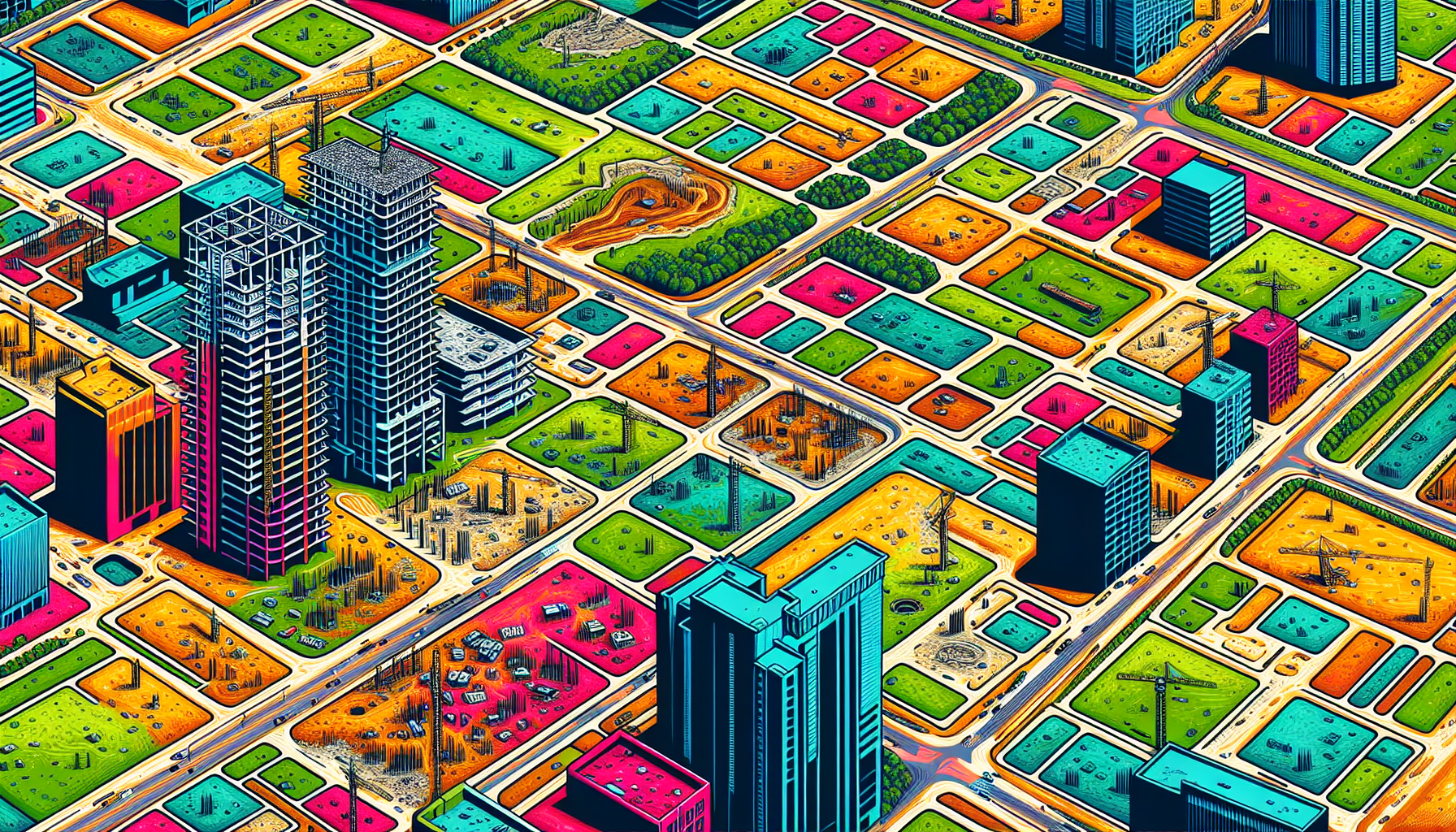
Today, they are about sustainability, innovation, and responsible use of land to yield economic, social, and environmental benefits. They have become an essential part of urban landscapes, contributing to the transformation of cities while maintaining a balance with nature.
Understanding Sustainable Land Development Projects
Sustainable land development projects aim to integrate human activities into the natural environment with minimal negative impact. They blend the principles of sustainable design and smart growth strategies with traditional land planning and civil engineering techniques.
The key features of sustainable land development projects include energy-efficient structures, effective waste management systems, water conservation, and the use of materials that reduce environmental harm. Moreover, these projects often focus on creating a community-oriented environment that promotes walkability, thereby reducing the dependency on vehicles and decreasing carbon emissions.
The Role of Smart Technologies
Smart technologies have become a mainstay in land development projects, leading to the rise of ‘smart cities.’ These technologies facilitate sustainable development by optimizing resource use and improving living conditions. Internet of Things (IoT), for example, enables real-time monitoring of energy and water usage, whereas Geographic Information Systems (GIS) provide insightful data for land use planning and management.
Spatial data from GIS can aid developers in identifying suitable locations for different land uses, thereby avoiding environmentally sensitive areas. Similarly, IoT can provide real-time feedback on the efficiency of energy and water systems, prompting necessary modifications to conserve resources.
The Impact on Urban Landscapes
Sustainable land development projects have a monumental influence on shaping urban landscapes. They promote compact development, reducing urban sprawl and preserving open spaces. Furthermore, they encourage the creation of mixed-use developments, which integrate residential, commercial, and recreational spaces, fostering a sense of community and reducing commute times.
Moving Forward with Sustainable Land Development
Today, land development projects are facing a critical juncture. With the pressing need to address climate change and the increasing demand for sustainable living environments, the role of sustainable land development has never been more crucial. Developers, urban planners, and government bodies must collaborate to ensure that these projects meet both environmental and social needs while providing economic viability.
Amid this backdrop, it is essential for developers to focus on two key aspects: transparency and engagement. Transparency in sharing project information with stakeholders can build trust and mitigate potential conflicts. On the other hand, engagement with local communities can provide valuable insights into their needs and expectations, helping to shape projects that cater to these requirements.
As sustainable land development projects continue to evolve, they present an exciting opportunity for reshaping the future of urban landscapes. These projects are more than just a construction venture – they are a testament to the power of sustainable design and innovation in creating better, more resilient cities for future generations.